Please be aware of our copyright notice. If you have a good reaon for using a photo from this site ask permission from first - it is frequently given.
Bulleid 350hp Shunter/Class 12

photograph: Graham R 'Muz' Muspratt collection.
|
| Along with the other pre-nationalisation railway companies,
the Southern Railway was looking for the future of locomotive power, both
electric and diesel, as a result of which Bulleid designed his 0-6-0 diesel
electric shunter.
Although ordered by the Southern Railway, the locos did not
make their appearance until after nationalisation when 26 were built which
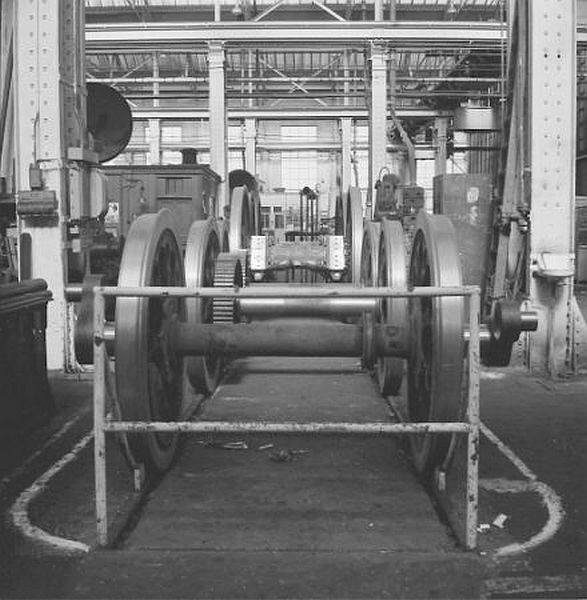
became numbers 15211 to 15236. The locomotives, looking very similar to the Class 08, Class 09 and
Class 11 shunters (and also those constructed by the GWR), had larger 4ft 6in
diameter "Bulleid-Firth Brown" type wheels, (the same size as used by
Maunsell on his 1937 diesel shunters) as
opposed to the 4ft 2in, normally spoked variety used on the others. Initially painted plain black with red bufferbeams, the locos were later painted Brunswick Green with the BR crest on the engine compartment door and at least one, 15212, was subsequently to appear in rail blue with the BR logo on the side of the cab beneath its number. At first the class was based in south London at either Hither Green or Norwood Junction. In the early 1950s some were moved to Eastleigh and later others moved to Ashford. During the 1960s some were to be found working from Bournemouth shed. Bulleid's shunters had a central dual controlled desk, as in current practice, but in order to start the engine oil had first to be pumped up to engage the pressure switch. The pump was in the engine compartment which meant that starting required two people - one on the pump and one on the control handle engaging the start position. The locos lent themselves to easy maintenance as the exhaust valves were located in cages and could be extracted without removal of the cylinder head, as on the Class 08. Thus on the locos' six- and 12-monthly overhauls, the carbon build-up on the valves would be removed, the valves decarbonised, lapped in and then lapped into the cylinder head again without a major engine strip down. Faults with this class were not that frequent, but one of the main occurrences was cracking of the cooling water transfer pipes, known as telephone pipes! The sanding gear also required regular attention, a common fault being blockage of the trap resulting in the air injector being unable to deliver sand to the rails, a fault more serious in a shunting locomotive than in a main line one because the rails it uses are in constant use. They were withdrawn from service between 1968 and 1971. |
|
|


This page was last updated 30 July 2006